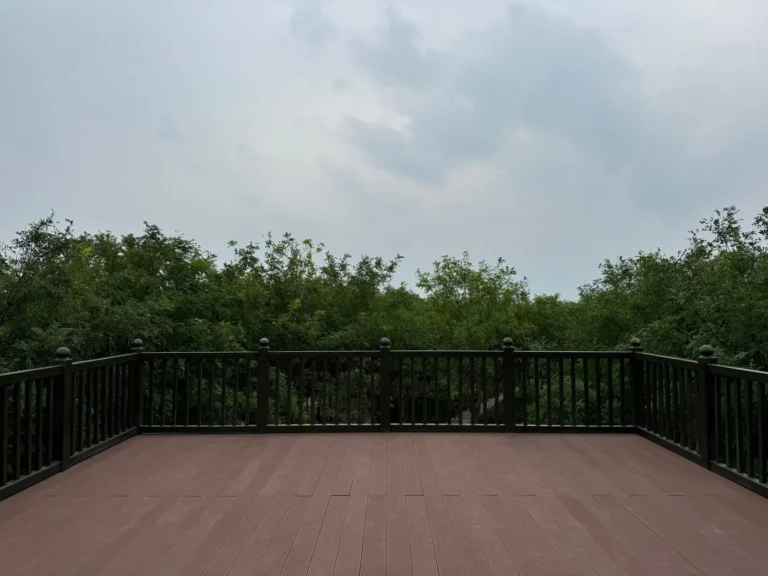

How Much Should a Deck Cost to Replace? A Complete 2026 Pricing Guide
If your deck is splintering, sagging, or failing inspection, you’re probably asking the same question every homeowner faces: how much should a deck cost to replace? The short answer is that most homeowners pay between $5,000 and $15,000 for a full tear-out and rebuild, with the national average landing around $8,700. On the low end, a simple ground-level deck can cost as little as $2,500, while a large multi-level deck with premium materials and custom features can easily top $30,000.
The final number depends almost entirely on four things: the size of the deck, the material you choose, how hard the site is to build on, and where you live. Labor alone typically makes up 50% to 70% of the total bill.
This guide breaks down exactly what goes into that price, how materials compare, and where you can safely cut costs without ending up with a deck you’ll need to replace again in a few years.
What Factors Drive the Cost of a Deck Replacement?
Replacing a deck is different from building one from scratch. Before a single new board goes down, the old deck has to be demolished and hauled away, which adds $500 to $1,500 to the job. Then the condition of the existing structure comes into play.
The biggest cost drivers are:
- Size in square feet. This is the dominant variable. More deck means more material and more labor.
- Material choice. Pressure-treated pine is the cheapest; composite and hardwood sit at the top.
- Deck height and access. A second-story deck needs more framing, stronger footings, and sometimes a permit review for structural changes.
- Stairs and railings. Adding a staircase with a landing can add $1,000 to $3,000 on its own.
- Existing structure condition. If the ledger board, beams, or footings are still sound, you can sometimes salvage them and cut the cost.
- Local labor rates. A contractor in Seattle or Boston charges more than one in rural Ohio.
- Permits. Most municipalities require a permit for structural work, costing $100 to $500.

How Much Should a Deck Cost to Replace by Material?
The single biggest decision you’ll make is the decking material. It drives both the upfront price and how much you’ll spend maintaining the deck over the next decade.
Pressure-Treated Wood
Pressure-treated pine is the budget workhorse. It costs $15 to $25 per square foot installed, putting a 300-square-foot replacement between $4,500 and $7,500. The tradeoff is maintenance: you’ll need to clean and seal it every one to two years, and you can expect some warping and checking as it dries.
Cedar and Redwood
Naturally rot-resistant softwoods like cedar and redwood run $25 to $40 per square foot. They look better than pressure-treated pine and resist insects, but they’re softer and will still need regular staining to hold their color.
Composite Decking
Composite boards from brands like Trex, TimberTech, and Fiberon cost $30 to $60 per square foot installed. A 300-square-foot composite deck typically lands between $9,000 and $18,000. You pay more up front, but composite never needs staining and carries a 25-year warranty. This is why it’s now the most popular replacement choice for homeowners planning to stay put.
PVC and Premium Materials
PVC decking (like Azek) and tropical hardwoods such as ipe sit at the top of the range. PVC runs $40 to $95 per square foot, while ipe often exceeds $60 per square foot before you factor in the extra cost of stainless-steel fasteners and the labor of drilling into dense hardwood.
| Factor | Pressure-Treated Wood | Composite | Cedar/Redwood | PVC |
|---|---|---|---|---|
| Installed cost per sq ft | $15-$25 | $30-$60 | $25-$40 | $40-$95 |
| 300 sq ft deck total | $4,500-$7,500 | $9,000-$18,000 | $7,500-$12,000 | $12,000-$28,500 |
| Lifespan | 10-15 years | 25-30 years | 15-20 years | 25-30 years |
| Annual maintenance | High (seal every 1-2 yrs) | Very low | Medium (stain every 2-3 yrs) | Low |
| Best for | Tight budgets | Long-term value | Natural look | Low-maintenance luxury |
Cost by Deck Size: What Should You Budget?
Square footage is the clearest predictor of price. Here’s what a mid-range composite or cedar replacement looks like at common sizes, including demolition and standard railing:
- 10×10 deck (100 sq ft): $3,000-$7,000
- 12×12 deck (144 sq ft): $4,300-$10,000
- 12×16 deck (192 sq ft): $5,800-$13,500
- 16×20 deck (320 sq ft): $9,600-$22,000
A good rule of thumb is to budget $25 to $45 per square foot for a full replacement using quality materials, then adjust up for height, stairs, or premium finishes.
Labor, Permits, and Hidden Costs
When you compare quotes, remember that the material price is only part of the story. Here are the line items that surprise people:
- Demolition and disposal: $500-$1,500 to remove the old deck and haul it to the landfill or recycler.
- Ledger board and flashing repair: If the old deck’s connection to the house is failing, fixing it costs $200-$800 but is non-negotiable for safety.
- Footings and concrete: New or deepened footings run $100-$300 each, and code in cold climates requires them below the frost line.
- Railings: New railing costs $30-$60 per linear foot for basic wood, and $50-$120 per linear foot for composite or aluminum systems.
- Permits and inspections: $100-$500, depending on the municipality, and required for almost any replacement above ground level.

If you’re weighing whether to repair a few boards versus replacing the whole thing, the condition of the framing usually decides it. Rotted decking can be patched, but a soft beam or a failed ledger board means the structure itself is at risk. For more on the numbers behind a fresh install, see our guide on how much a deck installation costs.
How to Reduce the Cost of Replacing Your Deck
You don’t have to swallow the full price. Homeowners routinely trim 20% to 40% off a deck replacement with these moves:
- Reuse sound framing. If the posts, beams, and joists are still in good shape, you can resurface the deck with new decking and railing for roughly half the cost of a full rebuild.
- Demolish it yourself. Renting a dumpster and doing the tear-out yourself can save $500-$1,500, as long as you’re comfortable with a sawzall and a crowbar.
- Choose pressure-treated pine for the frame. Even premium decks usually use treated pine underneath, where it’s never seen.
- Simplify the design. Rectangular decks with straight stairs and standard railing cost far less than curves, multiple levels, and built-in benches.
- Get three written quotes. Prices for the same job can vary by 30% between contractors in the same town.
One easy place to save is the railing. If your decking is solid but the railing is the weak point, a targeted replacement is far cheaper than a full rebuild. Our breakdown of how much deck railing costs per foot covers those numbers in detail.
DIY vs. Hiring a Pro
Doing it yourself cuts labor costs out entirely, which can drop a $10,000 job to $4,000-$6,000 in materials. But be honest about the scope. A ground-level deck on flat ground is a realistic weekend-to-two-weekend project for a capable DIYer. A second-story deck with footings, a ledger board, and code inspections is a different animal — mistakes there are expensive and dangerous. Most structural failures on decks trace back to improper fastening or flashing, which is exactly the kind of detail a licensed contractor is trained to catch.
Frequently Asked Questions
How much should a deck cost to replace, on average?
The national average is around $8,700, with a typical range of $5,000 to $15,000. Simple ground-level decks can run under $3,000, while large premium builds exceed $25,000.
Is it cheaper to replace or repair a deck?
For localized damage like a few rotted boards or a wobbly railing, repair is far cheaper — usually $500 to $2,500. But if the framing, ledger board, or footings are compromised, replacement is safer and often more economical than chasing repairs a few hundred dollars at a time.
How long does a deck replacement take?
A standard single-level deck takes 3 to 7 days once materials are on site. Permits can add 1 to 3 weeks of waiting before work begins, and custom or multi-level decks can stretch to 2 to 4 weeks.
Does a new deck add value to my house?
Yes. A wood deck typically recoups around 65%-75% of its cost at resale, and a well-built deck is one of the highest-rated outdoor projects for buyer appeal.
Can you replace a deck in winter?
It’s possible, and some contractors offer off-season discounts. Cold weather affects concrete footing curing and makes some composites harder to cut, so spring through fall remains the ideal window in colder climates.
The Bottom Line
So how much should a deck cost to replace? Plan on $5,000 to $15,000 for most homes, driven mainly by the square footage and the material you pick. Pressure-treated pine keeps the upfront cost down but asks more of you over the years, while composite costs more now and almost nothing later. The smartest move is to get three written quotes, settle on the material that fits your budget and your tolerance for maintenance, and make sure the structure — not just the surface — is sound before you sign.
For a clearer picture of how these materials compare at a smaller scale, take a look at our guide on how much a simple deck costs, or read This Old House’s breakdown of deck building costs for a second opinion. A deck is a ten-to-twenty-five-year commitment, and getting the price right up front means you’ll actually enjoy it instead of dreading the next repair.