How Much Siding Cost Per Square Foot? A Material-by-Material Breakdown
If you have been putting off replacing worn siding because the numbers feel opaque, you are not alone. How much siding cost per square foot is the question every homeowner asks first, and the honest answer is that it depends on the material, your climate, and how much prep work your walls need. Most homes fall between $3 and $12 per square foot installed, with premium materials pushing past $25.
The good news is that siding is one of the most predictable exterior projects to budget for. Prices are quoted by the square foot, labor is well understood by contractors, and the material itself usually makes up only a third or so of the total bill. The rest is labor, house wrap, trim, fasteners, and removal of the old siding.
Here, we break down siding cost per square foot by material, explain the factors that move the price, and give you the numbers you need to get a fair quote.
Average Siding Cost Per Square Foot by Material
Siding costs vary far more by material than by anything else. Vinyl sits at the bottom of the range, while natural stone and brick sit at the top. The figures below are installed costs — the number that actually matters — rather than bare material prices.
| Factor | Vinyl Siding | Wood Siding | Fiber Cement |
|---|---|---|---|
| Material cost per sq ft | $2–$7 | $3–$9 | $2–$6 |
| Installed cost per sq ft | $3–$12 | $5–$15 | $5–$14 |
| Typical lifespan | 20–40 years | 15–30 years | 30–50 years |
| Maintenance | Wash it; occasional repairs | Paint/stain every 4–7 years | Repaint every 10–15 years |
For a 2,000-square-foot single-story home, that translates to roughly $6,000 to $24,000 for vinyl, $10,000 to $30,000 for wood, and $10,000 to $28,000 for fiber cement. A full breakdown of what replacement costs look like across materials lives in our guide to siding replacement cost per square foot.
Here is the rest of the material field, installed:
- Aluminum siding: $4–$11 per sq ft. Thin, dent-prone, and mostly a repair-market product.
- Steel siding: $6–$16 per sq ft. Tough and fire-resistant, but rarely used on houses.
- Engineered wood (LP SmartSide): $5–$12 per sq ft. Real wood look with better moisture resistance.
- Stucco: $6–$12 per sq ft. Common in the Southwest; needs a skilled hand.
- Brick veneer: $9–$28 per sq ft. The most durable option, and the most expensive to install.
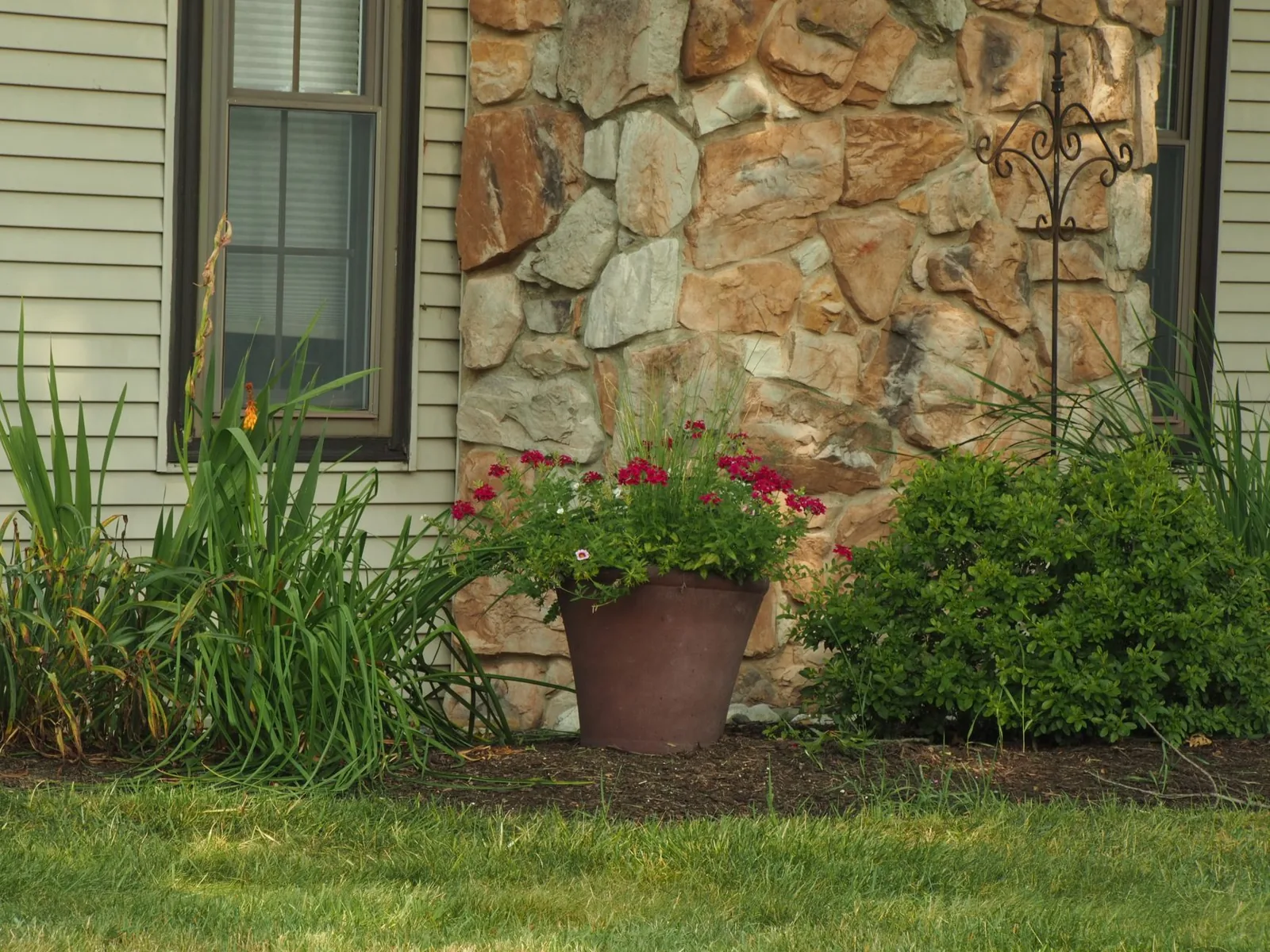
- Stone veneer: $11–$25 per sq ft. A high-impact accent, often mixed with cheaper siding.
What Drives Siding Prices Up or Down
Even within a single material, quotes on the same house can differ by thousands of dollars. These are the variables that explain why.
House height and access. A single-story ranch with clear walls is cheap to side. A two-story home with steep gables, dormers, and second-floor overhangs requires scaffolding and slows crews down, adding $1 to $3 per square foot on the labor side.
Removing old siding. Stripping and hauling away existing siding costs $1 to $3 per square foot. If the current siding is asbestos-cement (common on homes built before the 1980s), removal requires a certified crew and can double the figure.
Wall condition. Rot, carpenter ants, or missing sheathing underneath the old siding must be repaired before new siding goes on. Expect $3 to $6 per square foot of affected wall for sheathing replacement.
Climate and code. Wind-rated siding and fasteners are required in hurricane zones, and both cost more. Cold-climate installs also demand more insulation underneath, which is a separate line item.
Time of year. Contractors discount during winter lulls in mild climates. Scheduling in spring, when everyone else is too, will not get you a deal.
Vinyl Siding: The Budget Workhorse
Vinyl accounts for more installed siding in North America than any other material, and the reason is simple: it is the cheapest option that still looks acceptable and lasts. Material costs run $2 to $7 per square foot, and installed costs land between $3 and $12.
You get what you pay for at the low end. Cheap builder-grade vinyl can sag on a hot wall, crack in deep cold, and fade to a chalky finish in five years. Paying for thicker panels (0.046 inch or more) with UV-stabilized color buys a product that survives 30 to 40 years with little more than an occasional wash.
Insulated vinyl — panels with a foam backing — adds $1 to $4 per square foot but fills gaps better and can cut heat loss through wall studs. If you are replacing siding anyway and live somewhere with real winters, the upgrade usually pays for itself. For a deeper look at what a full re-side runs, see how much should siding replacement cost.
How Much Siding Cost Per Square Foot, Installed vs. Materials Only
This is the number that surprises first-time renovators: materials are often less than half the job. Here is how a typical vinyl re-side splits out.
- Materials (panels, trim, fasteners, house wrap): $3–$5 per sq ft
- Removal and disposal of old siding: $1–$3 per sq ft
- Labor: $2–$4 per sq ft
- Permits and waste fees: $0.25–$0.75 per sq ft
So a $7-per-square-foot quote might break down as $4 in materials and $3 in labor. That is why shopping purely on material price misleads you — a contractor who quotes cheap materials but slow labor costs the same or more than one who uses better panels.
Cutting corners on prep is the single most common way a siding job goes wrong. House wrap installed badly is pointless, and siding nailed over rotten sheathing is a warranty claim waiting to happen. Ask any bidder to spell out the prep work line by line.
Wood, Fiber Cement, and Premium Materials
Wood siding runs $5 to $15 per square foot installed, and it is priced on beauty rather than durability. Cedar and redwood resist rot better than pine, and clear vertical-grain boards cost the most of all. The catch is upkeep: wood in a damp or sunny climate needs repainting or restaining every four to seven years, and skipped maintenance shortens its life quickly.
Fiber cement — James Hardie is the brand most people know — costs $5 to $14 per square foot installed. Its appeal is that it looks like wood, shrugs off rot and termites, does not burn, and holds paint for a decade or more. It is heavier and dustier to work with than vinyl, so labor runs higher; budget on the middle of that range rather than the bottom.
Engineered wood products like LP SmartSide split the difference at $5 to $12 per square foot, offering the warmth of wood with better moisture performance and a lower paint cycle.
Brick and stone veneer are the top of the market at $9 to $28 per square foot, but they are rarely used on a whole house. A common strategy is to do the front elevation in stone veneer and the other three sides in fiber cement, which keeps the total bill reasonable while maximizing curb appeal. HomeAdvisor publishes current national averages for these materials if you want to cross-check a quote, and This Old House runs through the trade-offs of vinyl in detail.
Frequently Asked Questions
How much does it cost to side a 2,000 sq ft house?
Most 2,000-square-foot homes have about 1,500 to 2,000 square feet of exterior wall area. At $3 to $12 per square foot, expect roughly $6,000 to $24,000 for vinyl, $10,000 to $30,000 for wood or fiber cement, and more for brick or stone.
Is it cheaper to install siding yourself?
You can save the labor line — usually $2 to $4 per square foot — by doing it yourself, but siding is physically demanding work that requires ladders, scaffolding, and a nail gun. Mistakes are unforgiving, and a bad install voids the material warranty. Most homeowners are better off hiring a pro for the full job and saving DIY for small repairs.
What is the cheapest siding that still looks good?
Vinyl is the cheapest at $3 to $12 per square foot installed, and mid-grade vinyl with at least a 0.046-inch panel thickness looks far better today than the thin, shiny stuff of the 1990s. If you want a wood look for a little more, engineered wood is the value pick.
How long does siding last?
It depends on material and maintenance. Vinyl lasts 20 to 40 years, engineered wood 20 to 30, wood 15 to 30 with diligent upkeep, and fiber cement 30 to 50. Brick and stone can outlast the house itself.
Does new siding increase home value?
Yes — re-siding is consistently among the top exterior projects for recouped cost. Remodeling data shows siding replacement recovers a large share of its cost at resale, and fiber cement and wood tend to rank at or near the top for return on investment. If budget is the deciding factor, our guide to the average cost of siding replacement per square foot lays out the full picture.
The Bottom Line
How much siding cost per square foot has a wide answer because it should: you are choosing between a $3-per-square-foot vinyl panel and a $28-per-square-foot stone veneer, and everything in between. For most homeowners, the realistic range is $3 to $15 per square foot installed, which puts a full re-side somewhere between $6,000 and $30,000 depending on size and material.
The best way to protect yourself is to get at least three itemized quotes, insist on written prep-work details, and pick a material that matches your climate rather than just your budget. Cheap siding in a climate it cannot handle is more expensive than good siding installed once. Get your quotes in hand, compare them square foot for square foot, and the decision gets a lot easier.